Afghanistan
The ShepherdAfghanistan is the central operational landscape of Lawson’s assignment: a country he enters covertly, on foot, and under conditions that make terrain as consequential as any armed opponent. The narrative presents it through the practical demands of crossing and surviving—mountain routes that are difficult to monitor, a border approached through tribal areas, and minefields left from an earlier occupation. Afghanistan is not merely the destination of the mission; it continually narrows Lawson’s choices and ultimately makes his return a physical ordeal.
Operational Setting
Before Lawson leaves Boston for Pakistan, Niles, his Control, tells him to grow a beard. The explanation is practical: men in Afghanistan wear beards, and a Fixer arriving with a conspicuously smooth face would stand out. The detail establishes that the country’s social environment affects the assignment even before Lawson reaches it. His appearance is part of the preparation for passing through a place where he cannot rely on familiar surroundings or assumptions.
The mission is connected to movement across the Afghanistan–Pakistan border. Niles describes the back-and-forth traffic of Taliban fighters and the difficulty coalition troops face in watching every trail, valley, and crevice in the mountains. The terrain creates many routes through which fighters can move, while making comprehensive surveillance impractical. The target Niles identifies is one of the Fixers’ own, placing Lawson’s assignment inside a conflict shaped not only by geography but also by divided loyalties.
Niles warns Lawson that northern Afghanistan is unlike the urban or relatively comfortable rural environments where he has operated before. Lawson falls back on the principle he learned during STA-F Selection: the fundamentals remain the same wherever the job takes him. Niles counters that Afghanistan has a history of defeating outside forces that tried to control it, and that finding the target will not be easy. The contrast makes the country a challenge to Lawson’s confidence in portable professional rules: training still matters, but it cannot make the landscape predictable or easily mastered.
The Border Approach
Lawson’s route begins through Pakistan. On the journey toward Peshawar, Haydar identifies Dera Ismail Khan as a dangerous and divided town, despite its relatively small population. That description belongs to the approach rather than to Afghanistan itself, but it establishes the instability of the wider border region through which the mission moves. Peshawar, too, is presented as a place shaped by earlier conflict: Lawson knows it as a center for training anti-Soviet insurgents during the Soviet attempt to occupy Afghanistan, as well as a site of expanding weapons manufacture.
From Peshawar, the Landcruiser carries Lawson toward the frontier. As the city recedes, Haydar grows tense at the approach to tribal authority areas. After roughly twenty minutes of hard driving beyond the built-up areas, the immediate danger of the journey seems to ease. Haydar then leaves Lawson about five miles from the Afghan border, explaining that the vehicle would be too conspicuous if it went closer. The boundary is approached not by a formal crossing but by an animal run: a narrow, inconspicuous path that Haydar has scouted and that leads to rocks a short distance inside Afghanistan, where Lawson can wait for a signal.
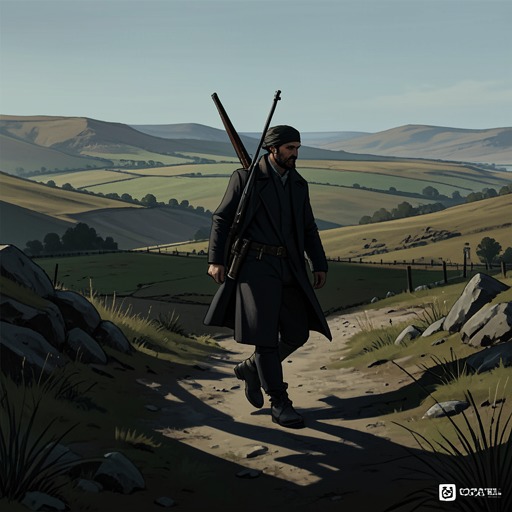
The terrain beyond the drop-off is undulating and offers cover to someone traveling on foot. Lawson takes his M4 and proceeds alone. During the crossing, a subtle change in the atmosphere makes him stop beside a small bush; his GPS confirms that he is now in Afghanistan. The passage is both geographical and tactical. A device registers the border, but the crossing itself depends on a concealed route, foot travel, and a suitable place to hide among the rocks.
Mines and the Legacy of Occupation
The dangers Lawson encounters are not limited to the current armed conflict. When he and Veena find themselves among land mines, Lawson recognizes that Afghanistan is one of the countries where such explosives remain widespread. He attributes their presence to the Soviet occupation, during which mines were scattered across the landscape. The old conflict persists as a material hazard, turning ordinary ground into a threat long after the forces that laid the mines have gone.
Veena’s foot is partly on a mine, and Lawson sees more mines around them. He believes that he is not standing on an explosive, but understands that Veena is likely to be killed if she moves. He also thinks of the danger to children who might cross the field. His speculation that children in war zones may already know to avoid it does not resolve the underlying failure: the field has no visible warning signs, and he wonders whether nearby units of the International Security Assistance Force knew it was there. He cannot understand why the area has not been cordoned off. In this scene, the minefield is simultaneously an immediate trap for the two characters and a sign of an enduring danger that remains unmarked for others.
Crossing Back and Narrative Significance
The border landscape continues to govern the action after the minefield encounter. When Lawson reaches its edge, he is confronted by an American whose face is streaked with camouflage paint and who orders him not to move. The brief encounter reinforces that Afghanistan is not an empty wilderness: its concealed routes and remote ground remain occupied by armed people whose identities and intentions Lawson cannot immediately know.
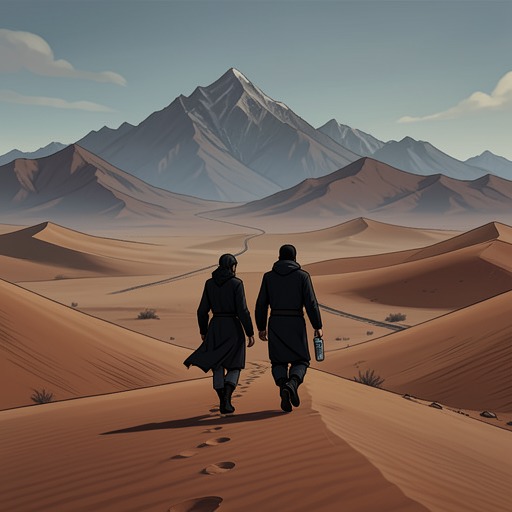
Later, an explosion knocks Lawson against nearby boulders. The account then carries the consequences forward to the crossing out of Afghanistan: three hours afterward, in the morning heat, Lawson struggles over the border with his gear in disarray, his M4 in one hand, and Veena’s body across his shoulders. His aching legs and injured, exhausted condition make the return a burden measured in physical effort. He would not leave Veena behind, because of what she had done for him. The border that had first offered a covert way in becomes the threshold he must cross while carrying the cost of the mission.
Afghanistan’s significance in the narrative lies in the way its geography joins distant histories to immediate decisions. Mountain trails enable fighters to move beyond easy surveillance; tribal areas make the approach dangerous; rocks provide concealment; and old mines make movement itself perilous. The country is therefore not simply a setting described from the outside. Its terrain repeatedly determines what Lawson and his companions can do, what they cannot safely know, and what it takes to get back.